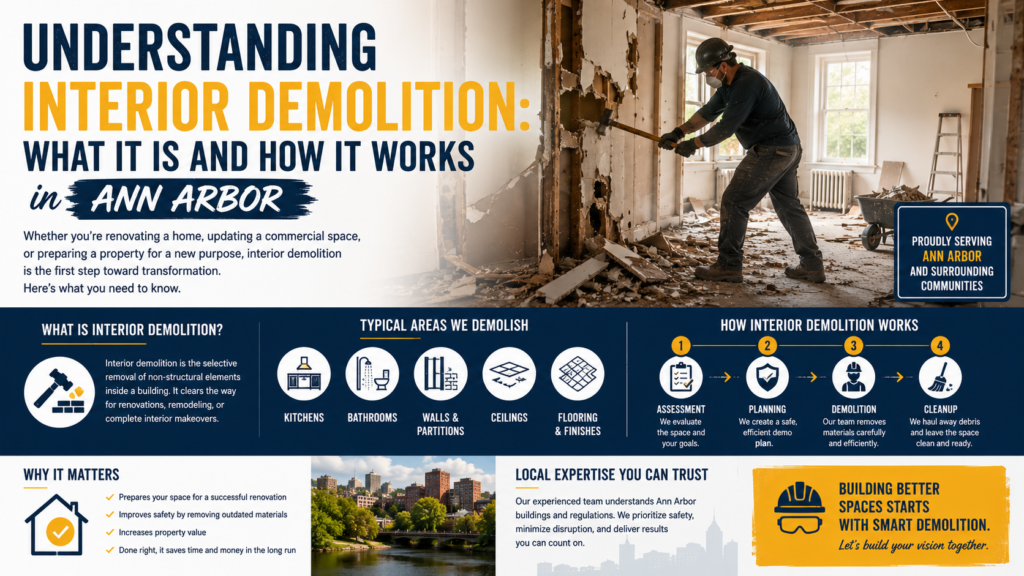
Interior demolition is a specialized construction process that involves selectively removing elements from within a building while keeping the outer structure fully intact. Unlike full structural demolition, which tears down an entire building, Interior Demolition Ann Arbor targets specific internal components such as non-load-bearing walls, ceilings, flooring, plumbing fixtures, and electrical systems. The goal is to clear a space in preparation for renovation, reconfiguration, or an entirely new interior design without disturbing the building’s foundational framework.
This type of work is incredibly common in renovation projects both residential and commercial where property owners want to repurpose or modernize the interior of an existing structure. In Ann Arbor, Michigan, where a mix of older buildings and newer developments defines much of the landscape, interior demolition plays a vital role in keeping spaces functional, updated, and safe.
Common Uses of Interior Demolition
Interior demolition is used across a wide range of projects. In residential settings, homeowners often opt for an interior gut-out when they want to completely overhaul a kitchen, bathroom, or basement. Removing dated cabinetry, old tile, outdated plumbing fixtures, or lathe-and-plaster walls gives contractors a clean slate for modern renovations.
In commercial settings, interior demolition is equally essential. When a retail space changes ownership, an office undergoes a layout transformation, or a restaurant is repurposed as a new kind of business, interior demolition is usually the first step. It allows building owners to eliminate outdated layouts, update building systems like HVAC and electrical wiring, and make room for fresh construction that aligns with current building codes and safety standards.
Other common applications include removing drop ceilings to expose original architectural features, stripping out old insulation before installing modern energy-efficient alternatives, and clearing entire floors of a multi-story building ahead of a major renovation.
The Interior Demolition Process Explained
A proper interior demolition project follows a clearly defined sequence of steps. Before any work begins, the project site is carefully evaluated by professionals. This assessment includes identifying load-bearing walls and structural elements that must be preserved, locating utilities such as gas lines, plumbing, and electrical systems, and checking for hazardous materials including asbestos or lead paint both of which were commonly used in buildings constructed before the 1980s.
If hazardous materials are found, specialized abatement procedures must be followed before demolition can proceed. This typically involves certified contractors who safely remove, contain, and dispose of the materials in compliance with local and federal regulations.
Once the site is cleared and safe to work in, the actual demolition begins. Workers use a combination of hand tools and mechanical equipment to systematically dismantle the targeted interior components. Precision is key crews must work carefully around structural elements to prevent accidental damage that could compromise the building’s integrity.
After the physical demolition is complete, debris is collected and transported for proper disposal or recycling. In Ann Arbor, contractors are expected to follow responsible waste management practices, which often include recycling or repurposing materials like metal, concrete, and wood wherever possible.
Permits and Regulations in Ann Arbor
In Ann Arbor, partial demolition that involves the removal of structural elements such as walls, roofing sections, or floor systems requires a building permit from the city’s building department. Even for non-structural interior work, it is often advisable to check with local authorities before beginning a project, especially in historic districts where additional review may be required.
The typical permit approval timeline for demolition projects in Ann Arbor runs approximately three weeks, though complexity and the completeness of the application can affect this. Contractors are expected to submit detailed project plans that show how the remaining structure will be supported throughout and after the demolition process.
Why Interior Demolition Matters for Renovation Projects
Interior demolition is not simply about destruction it is the essential first phase of transformation. By clearing out outdated or deteriorating components, property owners create an environment in which new construction can proceed safely and effectively. It allows for the modernization of electrical and plumbing infrastructure, the opening up of floor plans for better flow and usability, and the improvement of energy efficiency through updated insulation and systems.
For Ann Arbor property owners considering any type of significant interior renovation, understanding the role of professional interior demolition is a foundational step in planning a successful project from start to finish.