How to Reduce Customer Wait Times: 9 Proven Tactics for 2026
Long lines quietly kill revenue. When customers wait too long, they abandon purchases, post bad reviews, and never come back. Learning how to reduce customer wait times is one of the highest-return moves any service business can make in 2026, and a smart queue management system sits at the center of it.
This article breaks down nine practical tactics, backed by data, that cut waiting and lift satisfaction. Whether you run a bank branch, a clinic, or a telecom store, these strategies work.
Why Reducing Customer Wait Times Matters So Much
Waiting is emotional, not just logistical. A customer who waits without information feels ignored, and that feeling shapes how they judge your entire brand.
The numbers are stark. Studies referenced by the Qminder waiting research show most customers will abandon a line after only a few minutes of uncertainty. Every abandoned customer is lost revenue plus a potential negative review.
Cutting wait times, therefore, is not only an operations task. It is a direct lever on loyalty, reputation, and profit.
9 Tactics to Reduce Customer Wait Times
You do not need to fix everything at once. Start with the tactics that match your biggest pain point, then expand.
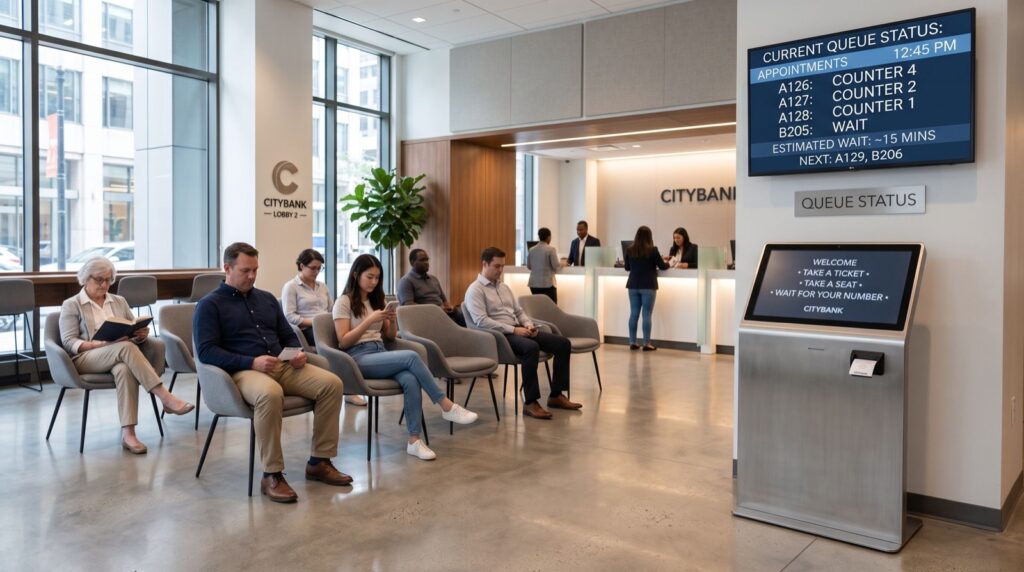
- Deploy a digital queue system. Replace physical lines with tickets so people wait fairly and comfortably.
- Offer virtual and mobile queuing. Let customers join the line from their phone and arrive when it is nearly their turn.
- Show accurate wait estimates. A visible countdown lowers anxiety even when the wait is the same.
- Balance staff to demand. Use historical data to schedule more agents during proven peak hours.
- Segment services. Separate quick tasks from complex ones so simple visits clear fast.
- Enable appointment booking. Pre-booked slots smooth out unpredictable walk-in spikes.
- Add self-service kiosks. Offload routine transactions from your counters entirely.
- Use digital signage. Clear screens guide people instantly and reduce confused back-and-forth.
- Measure and improve. Track service time per counter and coach where it lags.
The ROI of Faster Service
Reducing wait times is not a cost. It is an investment with a measurable return. When lines shrink, throughput rises, staff serve more customers per hour, and satisfaction scores climb.
| Metric | Before QMS | After QMS |
|---|---|---|
| Average wait time | 18 minutes | 6 minutes |
| Line abandonment | High | Low |
| Customers served per hour | Baseline | +30% typical |
| Satisfaction score | Moderate | Strong |
These illustrative figures reflect the pattern that service teams report after adopting structured queuing. The exact gains depend on your starting point, but the direction is consistent: faster service pays for itself.
How Does Technology Reduce Customer Wait Times?
Manual effort has limits. Technology is what makes wait-time reduction sustainable and scalable across many branches.
A modern platform handles ticketing, signage, analytics, and mobile queuing from one dashboard. That is why demand for a queue management system in saudi arabia continues to grow, as high-traffic banks and government centers need automation that a spreadsheet simply cannot deliver.
The same trend appears across South Asia. Businesses seeking a queue management system in pakistan want the same outcomes: shorter lines, cleaner data, and a more professional customer journey.
What to Automate First
- Ticket issuance and fair calling order.
- Real-time wait estimates on public displays.
- Peak-hour staff alerts based on live queue length.
- Post-visit feedback capture for continuous improvement.
Industry Examples of Wait-Time Reduction
Different sectors face different queuing challenges, yet the fixes rhyme. Looking at real-world patterns helps you spot what will work in your own lobby.
In banking, the biggest win comes from separating quick transactions, like deposits, from advisory sessions, like loans. When these share one line, everyone waits longer. Splitting them lets simple visits clear in minutes while complex ones get proper time.
Hospitals benefit most from virtual queuing. Patients dislike crowded waiting rooms, so letting them wait in their car or a quieter area, then calling them by SMS, reduces stress and infection risk alike. Telecom stores, meanwhile, gain from self-service kiosks that handle bill payments and SIM registration without tying up a counter.
The lesson is consistent across industries: understand your specific bottleneck first, then apply the matching tactic. A generic approach wastes money, while a targeted one delivers fast, visible results.
A Simple Weekly Improvement Routine
Sustained progress comes from a habit, not a one-time project. Adopt a short weekly review to keep lines shrinking over time.
- Monday: Pull last week’s average wait and service times.
- Wednesday: Identify the single worst bottleneck counter.
- Friday: Test one change, such as re-staffing a peak hour.
- Next week: Measure the impact and keep what works.
This lightweight loop turns your queue data into steady, compounding gains. Small weekly wins add up to dramatically shorter lines within a quarter.
Common Mistakes That Keep Lines Long
Even well-meaning teams stumble. Watch for these avoidable traps that quietly stretch your queues.
First, hiding wait information makes waits feel longer, so always show progress. Second, using a single counter for both quick and complex tasks creates jams, so segment your services. Third, ignoring your own data leaves bottlenecks invisible, so review analytics weekly.
Finally, some businesses buy hardware but skip staff training. A great system used poorly still produces long lines, so invest in onboarding. If you need outside help, partner with reliable local experts who can align the technology with your real workflow.
Frequently Asked Questions
How can I reduce customer wait times quickly?
Start with a digital queue system and accurate wait estimates. Simply informing customers of their position lowers perceived waiting immediately, while ticketing spreads demand fairly across counters.
Does virtual queuing really help?
Yes. Virtual queuing lets customers wait anywhere and return when it is nearly their turn. This cuts lobby crowding, reduces walkouts, and improves the experience without adding staff.
How do I measure wait-time improvement?
Track average wait time, service time per counter, and line abandonment before and after your changes. A good queue management system reports these metrics automatically on a live dashboard.
Is reducing wait times worth the investment?
Almost always. Faster service raises throughput, satisfaction, and repeat business. The revenue recovered from fewer walkouts and better reviews typically outweighs the system cost within months.
Conclusion
Reducing customer wait times is one of the smartest, most measurable upgrades a service business can make in 2026. Combine a digital queue system, mobile queuing, clear signage, and steady data review, and long lines become a problem of the past. Ready to shorten your queues and win back lost revenue? Explore a modern queue management platform and start delivering the fast, fair service your customers expect.